
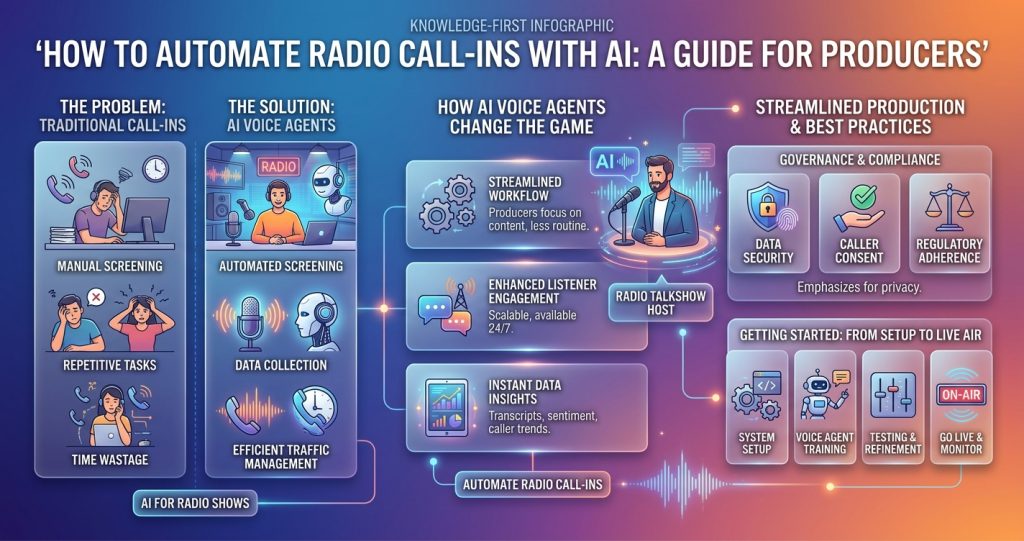
If you have ever produced a live radio show, you know the specific kind of chaos that hits when the phone lines open. You are juggling a dozen callers, trying to filter out the pranksters, managing the talent, and praying the next person on the line actually has something interesting to say. It is a high-pressure environment where your time is constantly being eaten by administrative gatekeeping rather than creative production.
As a founder, I am sure you have seen how this manual grind drains the energy out of even the best radio teams. The good news is that you do not have to settle for this level of friction anymore. By integrating AI for radio shows, you can reclaim those lost hours, letting smart voice agents handle the screening and intake while you focus on what actually makes for great airtime.
The Problem with Traditional Call-Ins
The current state of radio call-ins is, frankly, a logistical nightmare. Producers are stuck in a cycle of manual screening that is both inefficient and prone to human error. When a listener hits a voicemail box, the drop-off rate is immediate. People today have zero patience for leaving a message that feels like it will disappear into a digital void, and they rarely call back once they have been sent to a recording prompt.
To combat this, many stations try to patch together various third-party tools to manage lines, transcribe audio, and store caller data. This approach is a recipe for disaster. It creates fragmented data silos where your information lives in five different places, making it impossible to maintain a single source of truth. Worse, this cobbling together of services creates massive compliance headaches. When you use disconnected tools, you lose control over audit trails and data security, leaving your station vulnerable when regulators come asking about how you handle listener information.
We need a shift away from these disjointed workflows. The industry requires a unified system that can handle high-volume intake without sounding like a robotic, soulless menu. The goal is to maintain the human connection that radio is famous for, while offloading the gatekeeping to a system that is actually capable of keeping up.
| Feature | Traditional Methods | Unified AI System |
|---|---|---|
| Call Handling | Voicemail drop-offs | Live conversational intake |
| Data Storage | Fragmented silos | Centralized, secure vault |
| Compliance | High risk/Manual | Built-in audit trails |
| Efficiency | Low/Manual screening | Automated/Real-time |
How AI Voice Agents Change the Game
The shift toward AI for radio shows is not about replacing the human element; it is about enhancing it. Modern AI voice agents have moved far beyond the robotic, monotone menus of the past. Today, these systems utilize natural, human-like voices that include regional accents, ensuring that when a listener calls in, they feel like they are speaking to a member of your station staff rather than a machine. This level of realism is crucial for maintaining the intimate, conversational connection that defines great radio.
One of the most significant advantages is the ability to ground the AI in your station’s specific knowledge base. You no longer have to worry about an automated system giving incorrect information or going off-script. By pointing the AI toward your verified documents and website content, you ensure it answers questions strictly based on your provided data. This eliminates the risk of misinformation, keeping your brand reputation secure while the agent handles routine inquiries.
Beyond accuracy, these agents provide operational flexibility that human teams simply cannot match:
- 24/7 Availability: Your station never sleeps. AI agents handle incoming calls around the clock, ensuring that no listener is ever met with a dead-end voicemail.
- Multi-Language Support: With auto-detection for over 20 languages, your station can engage a diverse listener base without needing a multilingual staff on standby at all hours.
- Seamless Integration: The AI can intelligently look up staff in a contact directory and transfer calls, ensuring that when a listener needs a human, they are routed to the right person immediately.
By offloading the repetitive gatekeeping to a system that sounds authentic and stays on-message, you free your production team to focus on the creative storytelling that keeps your audience tuned in.
Streamlining Production with Smart Workflows
The beauty of modern AI for radio shows lies in how it transforms the producer’s desk from a chaotic command center into a streamlined production hub. By utilizing drag-and-drop conversational flows, you can build sophisticated intake sequences without writing a single line of code. Whether you are running a contest, collecting song requests, or gathering listener details for a segment, the AI handles the heavy lifting. You simply map out the steps, and the system guides the caller through the process, ensuring you get the exact information you need every time.
Managing the human side of the broadcast is equally intuitive thanks to the Smart Contact Directory. Instead of fumbling with extension lists or guessing who is available, your AI agent acts as a digital switchboard. If a listener asks to speak with a specific host or a particular department, the AI searches the directory in real-time, checks availability, and routes the call accordingly. It removes the guesswork, ensuring that your talent is only interrupted when a call is truly relevant to the segment at hand.
Perhaps the most vital tool for any producer is the live monitoring dashboard. This feature allows you to maintain total control over the airwaves:
- Real-Time Transcription: Watch the conversation unfold on your screen as it happens, allowing you to gauge the quality of the caller before you even pick up.
- Listen-In Capability: Monitor the AI agent’s performance discreetly to ensure the tone remains consistent with your station’s brand.
- Instant Takeover: If a caller has a story that is too good to miss or if a situation requires a human touch, you can jump into the conversation with a single click.
This level of oversight means you are never flying blind. You get the efficiency of automation without sacrificing the ability to pivot instantly, keeping your show dynamic and responsive to your audience.
Governance, Compliance, and Data Security
When you are running a radio show, the last thing you want is a compliance nightmare. In the past, managing listener data meant juggling spreadsheets and hoping your team followed the rules. With AI, we move from hope to certainty. Accountability is not just a checkbox; it is the foundation of the system. Every single interaction is recorded, encrypted, and transcribed, creating a full audit trail that tracks exactly who did what and when. If a regulator comes knocking, you do not have to scramble to find records; you simply pull the report.
Listener privacy is non-negotiable. We know that callers often share sensitive details, from phone numbers to personal stories. Our system uses automated PII redaction to ensure that credit card numbers, national IDs, and other private information are masked or hashed before they ever hit your dashboard. This happens in real-time, meaning your production team sees only what they need to see, keeping your station safe from accidental data exposure.
Furthermore, we have built the platform to be fully GDPR and PDPA ready from day one. Whether you are handling data for a contest or a simple call-in, the system ensures you remain compliant with local and international standards. This includes features like:
- Data Retention Controls: Set specific windows for how long recordings and transcripts are kept, with automatic cleanup to ensure you are not holding onto data longer than necessary.
- Right to Delete: Easily purge all records associated with a specific caller upon request, ensuring you meet your legal obligations without manual searching.
- Tenant Isolation: Your station’s data is completely siloed, preventing any crossover and ensuring that your listener information remains strictly yours.
By baking these protections into the workflow, you get to focus on the broadcast while the system handles the heavy lifting of security. It is about building trust with your audience, knowing that their privacy is protected by design, not by accident.
Getting Started: From Setup to Live Air
Transitioning to an AI-powered phone system is far simpler than most producers expect. You do not need a degree in computer science or a massive IT budget to get started. The process is designed to be intuitive, moving from configuration to live air in three straightforward steps:
- Connect Your Phone System: Link your existing telephony setup directly to the platform. It works with standard configurations, meaning you can keep your current numbers without needing new hardware.
- Train Your Agent: Choose your preferred voice and regional accent, then upload your station documents or point the AI to your website. The system ingests this data to ensure it only answers based on your verified content.
- Go Live: Once configured, you are ready to start taking calls. You can monitor the system in real-time, making adjustments as you observe how listeners interact with the agent.
| Feature | Benefit for Producers |
|---|---|
| Live Dashboards | Monitor calls and takeover instantly. |
| Sentiment Analysis | Understand listener mood and trends. |
| Email Digests | Get actionable insights on schedule. |
Astiostech